Diagnostic write-ups, made easy.
One sheet per car, filled in as you work it. The repair order needs the write-up anyway — this just makes it worth something afterwards.
Free forever for one technician. No card, no trial clock.
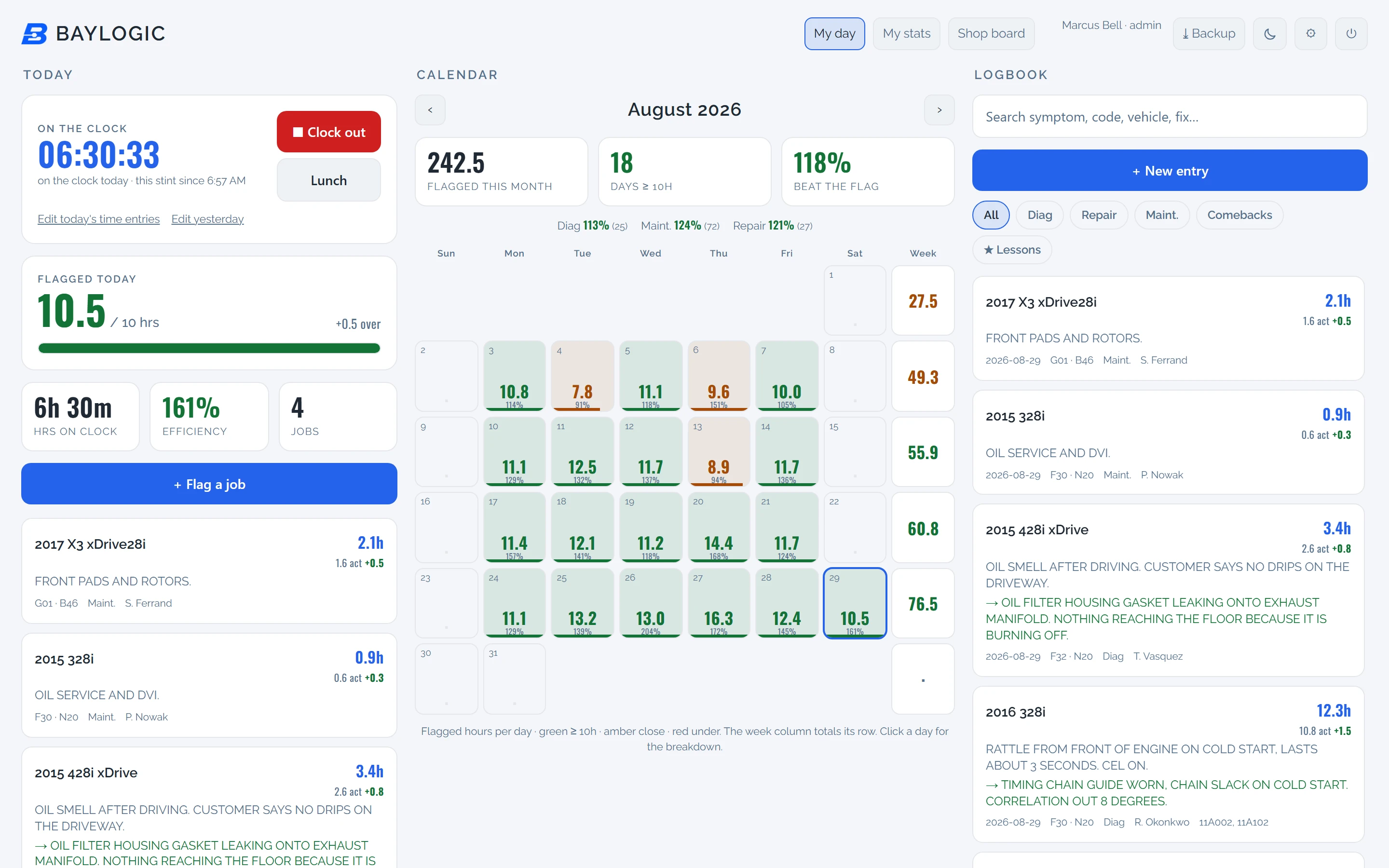
A demo shop, built from a script. Northgate Bavarian does not exist, so nobody’s customers end up on a website.
Pays three ways
The reason this works is that nobody is asked to do anything extra. The write-up already has to happen.
For you
Formal notes for less effort, hours tracked against the flag, and a page that shows where you are losing time — confirmed-cause rate, comebacks, actual against booked.
For the writers
Polished, consistent Concern / Cause / Correction text, in plain sentences, without anybody chasing you down the shop for it at four o’clock.
For every tech later
A searchable record of confirmed diagnoses, by fault code and model. Starting with your own, which is the one you reach for most.
One sheet, filled in as you work the car
Not a notes app you have to remember to open. Four things happen to the job you are on today, in the order you would do them anyway.
The sheet asks; you answer
Complaint, codes, what you found, what you did, what it still needs. Fields instead of a blank box, so the parts of a write-up that get forgotten at four o’clock are sitting there empty asking to be filled.
The write-up comes back finished
Concern, cause and correction in plain sentences, dated and initialled and ready to paste into the RO. It never invents a detail you did not write, and your own words are kept beside it.
The hours land on the right day
Hours go on the repair, not the car — three jobs on one car is three sets of booked against actual. A repair that ran across three days puts its hours on the days you did them, and your clock runs beside them without you thinking about it.
It asks whether the fix held
When you close the job, and again a month later if the car has not come back. “It did not fix it” is a first-class answer — those are the cases that teach the most.
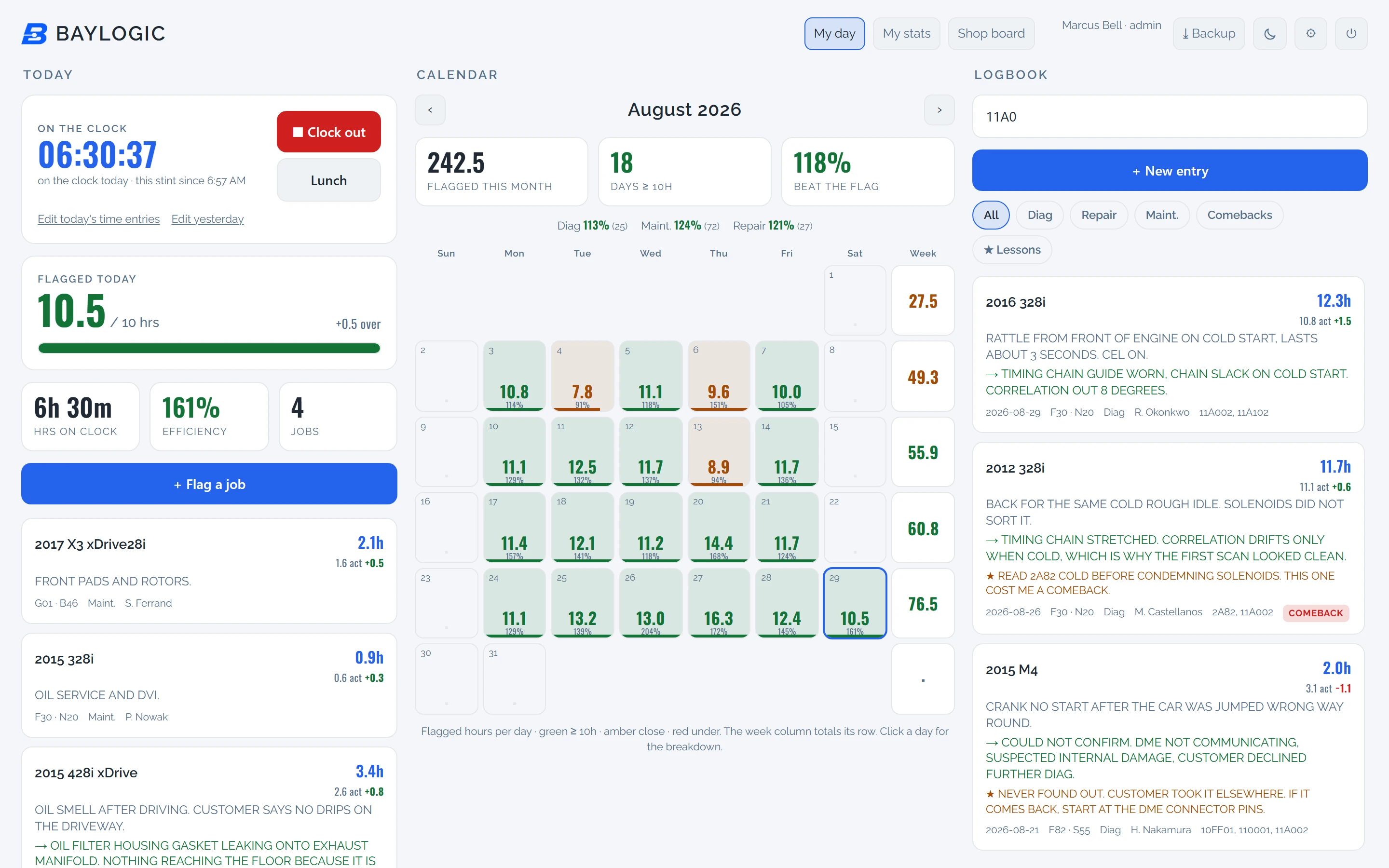
Six months on it is a record, not a note. Every code you typed — P0171, C1234, 480A55 — is stored as a code you can search by, exactly as it came off the car. Where a code carries a subfault, the family is indexed too, so a hit on a different subcode is still a lead. One search for 11A0 here, three different cars.
Where you are actually losing time
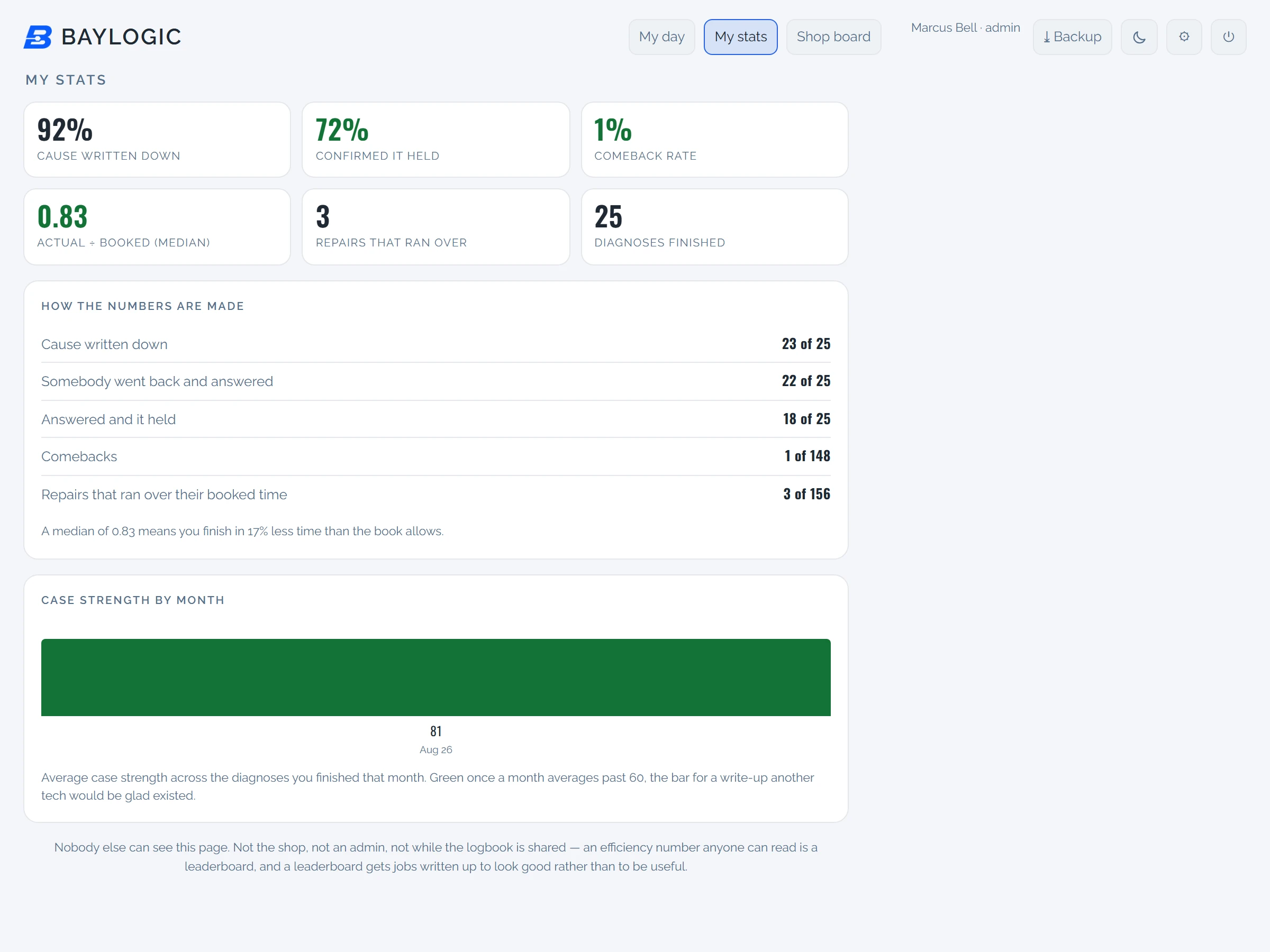
How often you write the cause down, how often the fix held, how often a car came back, and how you really run against the book.
Your own page, and only yours. An efficiency number anybody can read is a leaderboard, and a leaderboard gets jobs written up to look good rather than to be useful.
The floor, on one screen
The tech side is free and always will be. What a shop pays for is the half a technician does not need: knowing where every car in the building actually stands, without walking out to ask.
The board on the wall
Every car in the shop, who has it, and what it is waiting on. Four states rather than a tick box — and waiting says whether it is parts or the customer, because those are two different phone calls. Runs on any screen you can hang, on its own credential.
Writers run it, techs work it
Writers add cars, assign them and set promise times a technician can read from across the bay. Techs move their own cards and add notes. Announcements go up for the whole floor without a group text nobody reads.
The shop’s own history
Turn the shared logbook on and the floor reads each other’s finished cases — one searchable record of what this shop has already fixed, instead of three techs each remembering a different half of it.
One thing a shop plan does not buy: anybody’s hours. Clock time and flagged time stay private to the technician, with no admin override, and that is not an oversight — it is the reason the write-ups are honest enough to be worth reading later.
It leaves with you
Full export, any time, in one click — every job, every hour, every fault screenshot. Stop paying and it goes read-only with the export still working. Your diagnostic history is the most valuable thing you build in this trade, and holding it hostage would be a strange way to ask for twenty-nine dollars.
The logbook is free, and stays free
Sold to the technician first — they are your hours and your paycheck. The shop plan is for the floor around you, and you do not need anybody’s permission to start.
- Your jobs, your search, your hours
- Fault-code index and case scoring
- RO write-ups
- Full export, always
- Search every published case
- By fault code, code family and model
- Confirmed fixes ranked first
- Publish one of your own and that month costs nothing
It opens when there are enough confirmed cases to be worth searching. A database that answers nothing is worse than none.
- The board on the wall, on any screen
- Promise times and what each car waits on
- Writer and admin roles
- Shared logbook across the floor
- Hours stay private — no leaderboard
- One bill
Start with the job you are on today
One car, written up once. In a year it is the thing you check before you start pulling covers off.